

What Is Organic Search
Organic search is when someone types a query into Google and lands on your website — without any paid promotion. This traffic isn’t bought, it’s earned. A blog post, a service page, a landing page — if they’re well-optimized and answer the user’s question, Google will rank them on its own.
Example: someone searches “how to choose a CRM for a small business” and finds your comparison article. You didn’t run any ads. You simply created useful content. That’s SEO in action.
What Is Paid Search (PPC)
Paid search is advertising in Google (or other search engines) where you pay each time someone clicks on your ad. These results appear above the organic listings and are marked with a “Sponsored” label.
The principle is simple: you choose keywords, place bids — and your ad appears immediately. No waiting months for Google to “notice” your site.
Example: you’re launching a new automation service and want clients this month. You run a campaign — and start getting leads the very next day.
Key Differences at a Glance
| Parameter | SEO (Organic Search) | PPC (Paid Search) |
|---|---|---|
| Results | Unpaid, earned | Paid ad placements |
| Clicks | Free (but take time to build) | Pay per click |
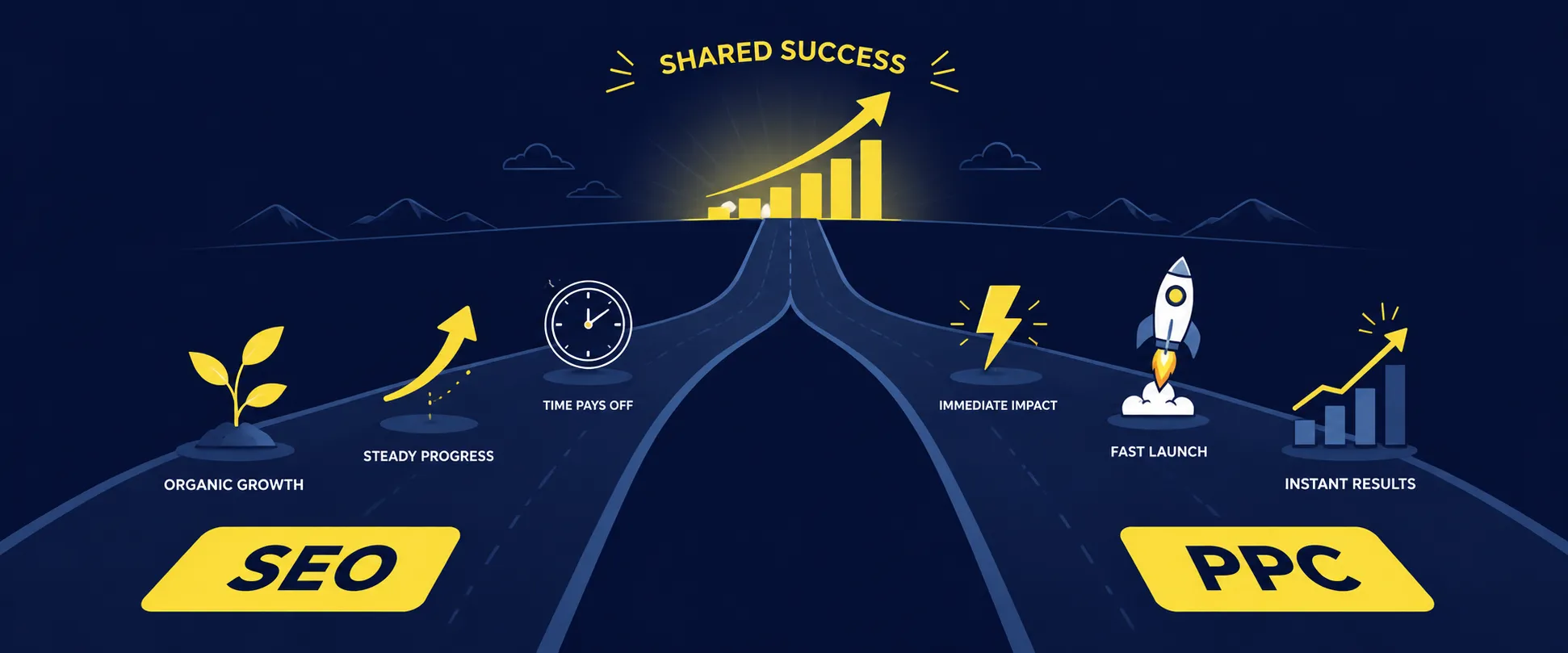
| Speed | Results in 3–6 months | Traffic from day one |
| Effect | Compounds over time | Stops when budget runs out |
| Trust | Higher — organic feels earned | Lower — “Sponsored” label is visible |
| Best for | Brand building, long-term traffic | Fast launches, competitive niches |
When to Choose SEO
If you’re building a brand for the long term
SEO works best at the early stages of the buyer’s journey — when people are researching topics and comparing options. Your helpful content introduces them to your brand long before they’re ready to buy. It’s not an immediate sale — it’s building trust.
If you want traffic without paying per click
Once your content reaches the top positions, it works for free. An article written a year ago can bring in new visitors every day. For businesses with limited budgets, this is especially valuable.
If you’re playing the long game
SEO is an asset. Every optimized page keeps driving traffic for months and years. Unlike ads, which stop the moment your budget runs out.
If your content is evergreen
“How to choose accounting software”, “what is NPS”, “difference between B2B and B2C” — these queries don’t lose relevance. Evergreen SEO content keeps attracting traffic for years.
If you want trust and authority
An organic result feels earned. If your site appears on page one without a “Sponsored” label — users see you as an expert. And they’re more likely to click.
When to Choose PPC
If you need results right now
Launch the campaign — traffic starts flowing. Perfect for new product launches, seasonal campaigns, or situations where waiting months simply isn’t an option.
If you want to test hypotheses quickly
Not sure if there’s demand for your offer? Run ads for a week and see what converts. PPC delivers real data fast — no months of waiting.
If you need precise targeting
PPC lets you show ads to people who are already ready to buy — targeting specific commercial queries, locations, times of day, and devices. Organic search can’t match that precision.
If your niche is highly competitive
In competitive niches, ranking organically on page one takes time and effort. PPC gets you there today — while SEO works in the background.
If you have a budget and a clear goal
The average ROI for Google Ads is around 200%. When a campaign is set up properly, PPC can be highly profitable. The key is choosing the right keywords and having a converting landing page.
Cost and ROI: Short-Term vs Long-Term
SEO: high upfront investment — lower cost over time
The first few months you’re investing — time, content, optimization — without seeing major results. Around month 4–6, the curve starts to shift. Your cost per acquisition (CAC) drops — and keeps dropping, because your content works without ongoing spend.
PPC: fast start — ongoing costs
PPC delivers results from day one but requires a constant budget. Pause the ads — traffic stops. In competitive niches, cost per click can rise significantly over time. That’s why ongoing campaign optimization is essential to keep ROI healthy.
How SEO and PPC Work Together
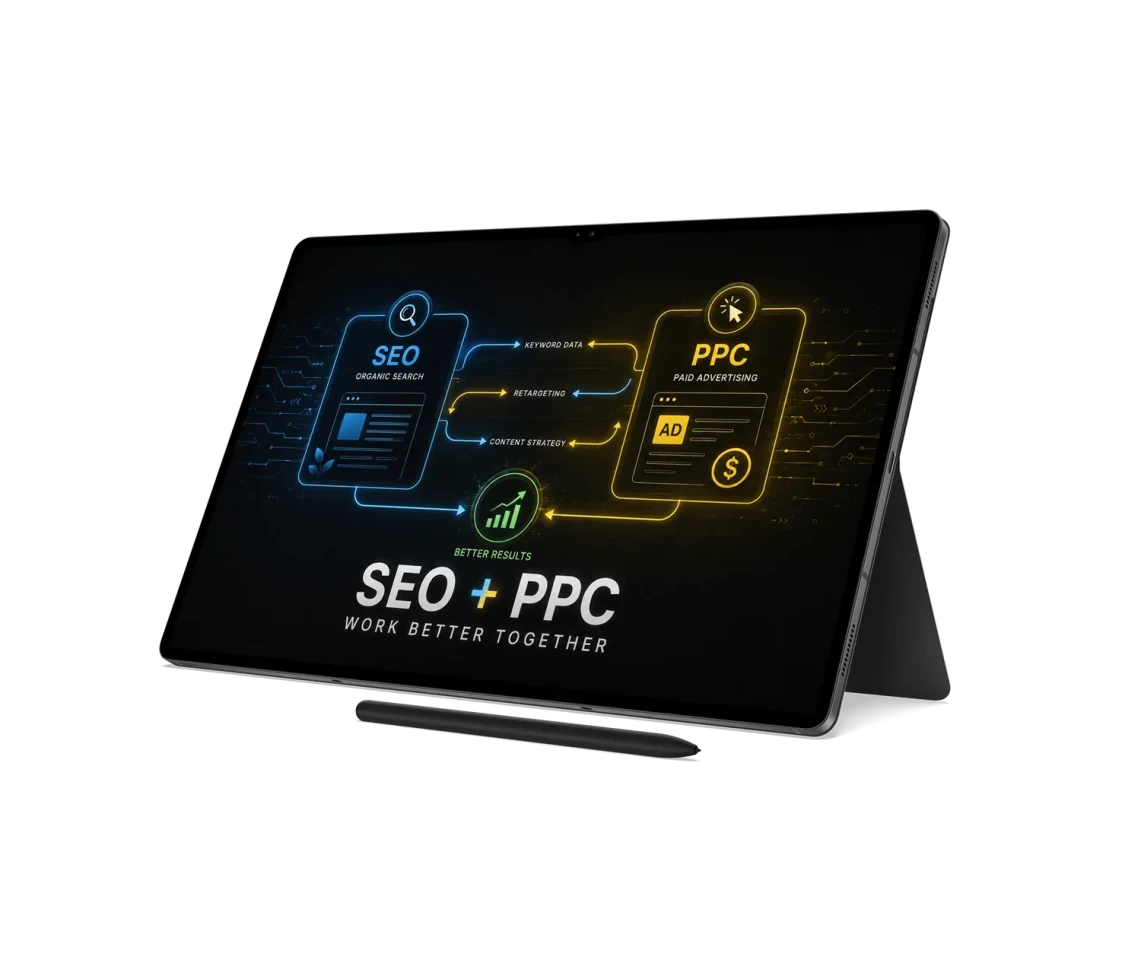
The question isn’t always “SEO or PPC.” Often the right answer is both — but with a clear understanding of when and why.
Use PPC to test keywords before investing in SEO
Not sure whether to create content around a specific query? Run ads and check if real demand exists. If clicks come in at an acceptable cost — write the article and invest in SEO.
Run PPC while SEO develops
A new site doesn’t rank immediately. PPC lets you get leads right now, while organic search warms up in the background.
Use retargeting to bring back organic visitors
Most people who arrive through organic search don’t convert immediately. PPC retargeting brings them back when they’re ready to act.
Own more space in search results
If your ad and your organic result both appear for the same query — you take up twice as much space on the page. That increases recognition and trust.
Use PPC data to shape your SEO strategy
Which ad headlines get the highest CTR? Which keywords drive conversions? All of this is a roadmap for your SEO content. Don’t ignore that data.
Which Is Better for Your Business
A quick cheat sheet:
- Need results right now → PPC
- Limited budget, playing long-term → SEO
- Testing a new product or market → PPC first, then SEO
- Highly competitive niche → PPC + SEO in parallel
- Want to lower customer acquisition cost over time → SEO
- Want to build authority and trust → SEO
- Need precise analytics and control → PPC
Conclusion
SEO and PPC aren’t competitors. They’re two tools with different strengths. SEO builds an asset that works for years. PPC gives you immediate visibility and control over results right now.
The most effective strategy is combining both: PPC for fast results and testing, SEO for long-term growth and lower customer acquisition costs. Together, they deliver far more than either could alone.
Not sure where to start? Get in touch with our team. We’ll analyze your situation and build a strategy that fits your goals and budget.